Pentax Papilio
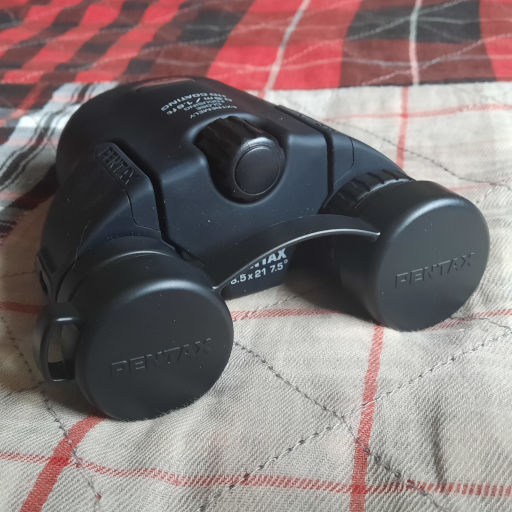
I own a pair of Pentax Papilio binoculars. Specifically, I have the Papilio III 6.5x21 WR Black model (available from Binoculars Canada). In binocular terminology, 6.5 is the magnification, and the 21 is the diameter of the objective lens which roughly governs how much light passes through the optics and, consequently, how bright the resulting image is.
Note that this is my only pair of “real” binoculars, so I don’t have much else to compare it to.
Magnification
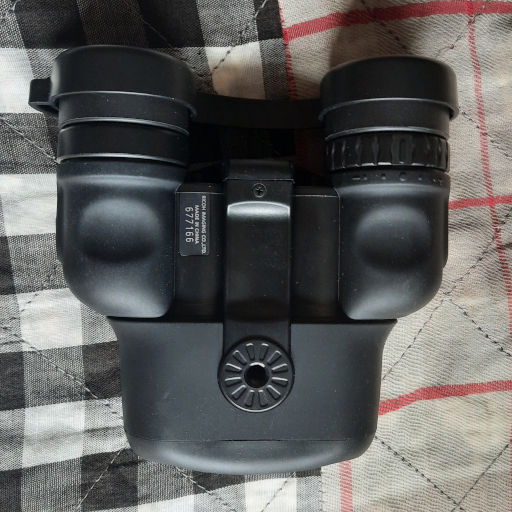
The 6.5 magnification is, for me, good enough to watch birds in the sky, look at the moon, stare at bugs, etc. although there are definitely times when I wish I had a bit more magnification. However, I suck at holding things still, so I find that the lower magnification makes it easier to keep the image stable compared to high magnification binoculars which I often find frustrating to use.
Durability
With the Papilio 3, the lens coating is good as far as I can tell. It didn’t take any damage when I dropped it, and I haven’t needed to wipe any fingerprints off of the optical lens cover so far.
The chassis feels good and has a nice rubbery coating. The binoculars would probably be fine in non-heavy rain, but I’m too scared to put that to the test. I find that the dust tends to stick to the rubbery bits, but as explained in Bosque Rico’s review, this can be quickly cleaned using masking tape.
Case
I love the case — it feels nice and works well.
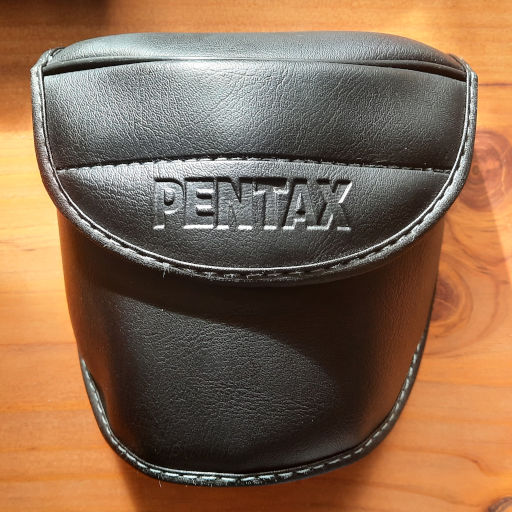
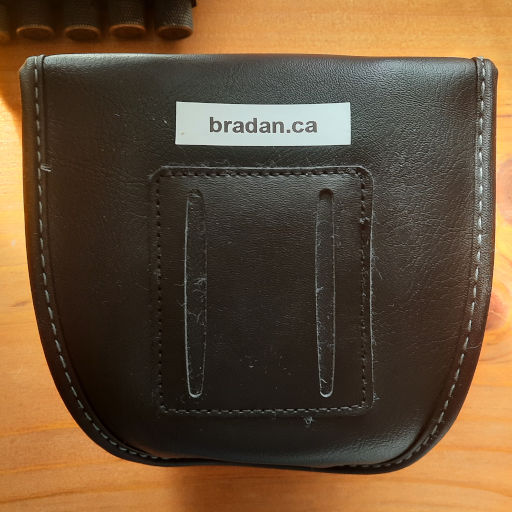
Image quality
I’m usually sensitive to chromatic abberation, but for what it’s worth, I barely notice it the Papilio III. This might be more of a problem with the 8.5x model, but I’ve not had a chance to try it.
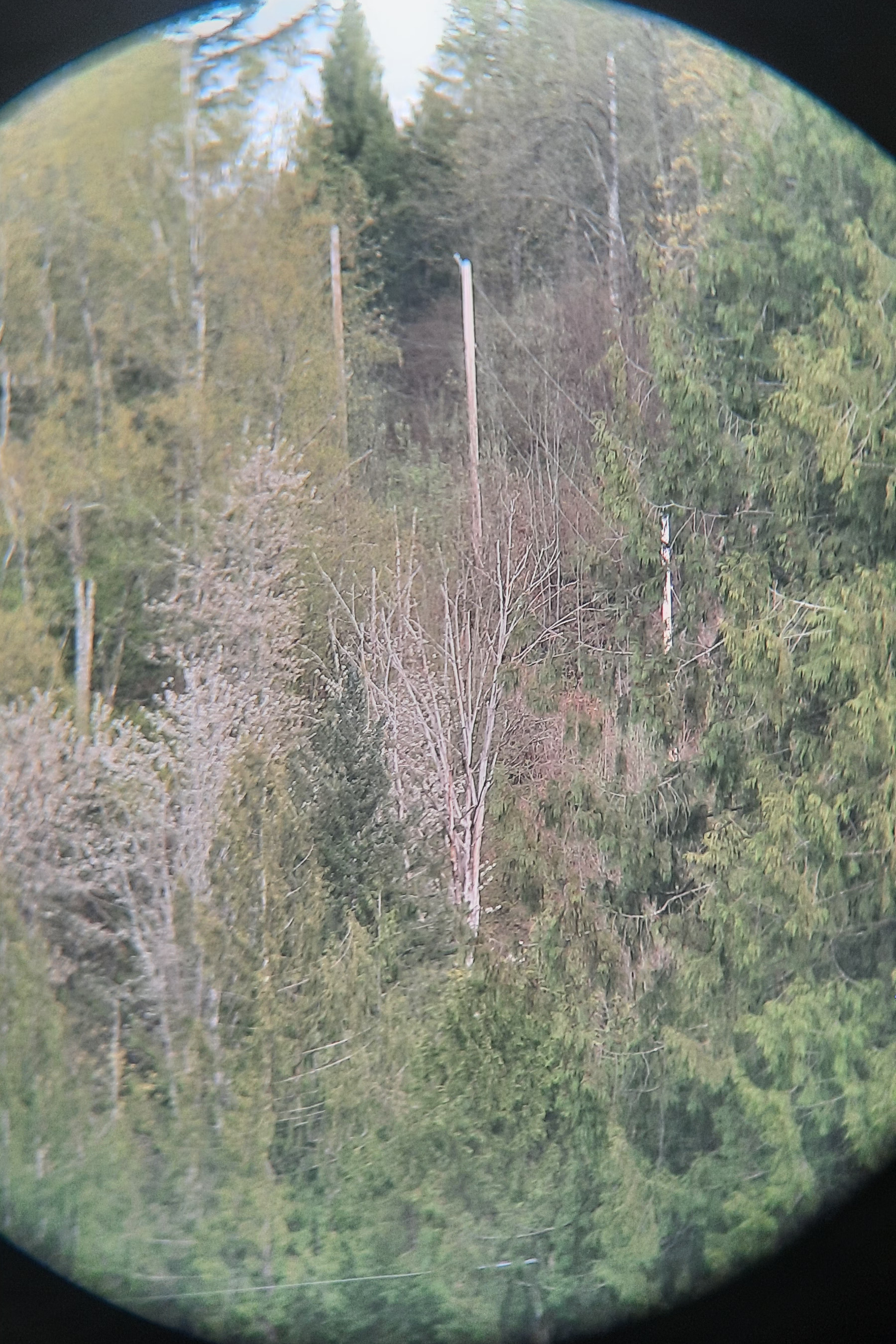
I took this photo by holding my phone camera near the eye cup of the lens, so the quality isn’t great. The blurring and chromatic abberation near the edges seems to be an artifact of this — it’s barely noticeable in-person.
Usability
My interpupillary distance is 68 mm according to my eye doctor, and the Papilios were more than able to accommodate that. I find that I can see through it just fine even if I don’t position the barrels quite right, so it’s quite forgiving in that regard.
The eyecups are also adjustable, and I find that the eye relief is good enough that I can use it with glasses just fine. However, I need to push the glasses right up to my face, and the rubber coating on the eyecups leaves a mark on my glasses afterwards, so it’s a bit annoying. However, the dioptre settings are adjustable such that glasses may not be necessary depending on your prescription.
Close-up use
The flagship feature of the Papilio is that it has a ridiculously low minimum focusing distance of 50 cm, and I can confirm that this is accurate. I’ve spent more time using these as a pseudo-microscope than a pair of binoculars, and it is especially neat to see small details in 3D.
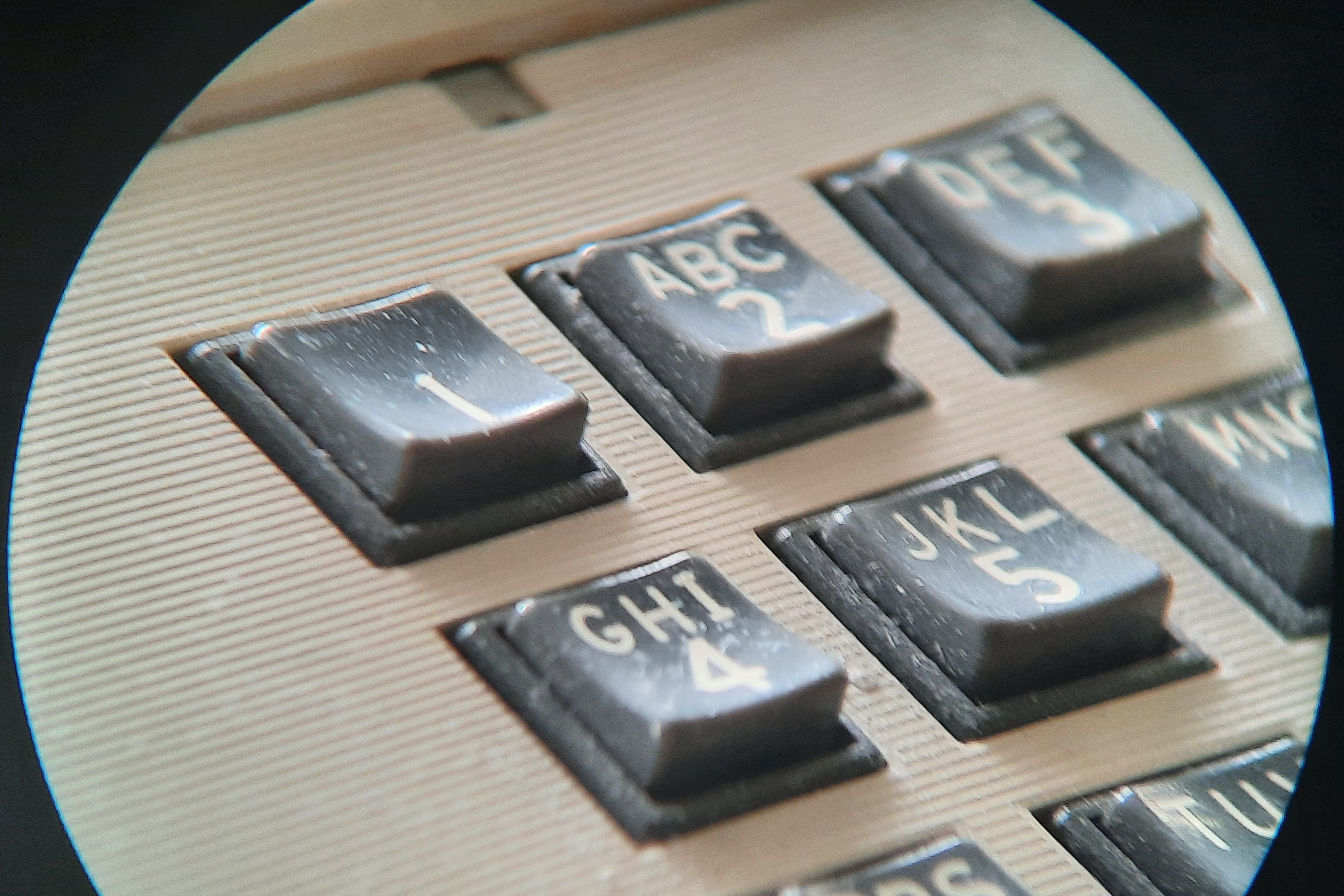
Notice that distant keys go out of focus: this is not an artifact. The depth of focus is especially narrow at short distances, and I’ve found that this is actually quite nice. For example, you can point the binoculars at a pond, focus past the surface of the water, and clearly see the critters at the bottom.
Verdict
I couldn’t be happier with these. If you’re looking for a first pair of binoculars, this is probably a good option.
That said, the Papilio II often goes on sale for almost half the cost of the Papilio III ($119 v. $219 CAD), and from what I’ve read, the differences seem to be minor. If you’re okay with giving up the weatherproofing and a bit of clarity, the older model is probably a better value.
Other resources
-
Papilio
III binoculars review: Bosque Rico’s review of the
Pentax Papilio.
- I can confirm that the video demonstrations are accurate to how the binoculars actully look.
- Pentax Papilio III Binoculars: A “first impressions review of the binoculars with specifications listed.
- RICOH Launches PENTAX Papilio III WR: The official press release and specifications table.