Supplements
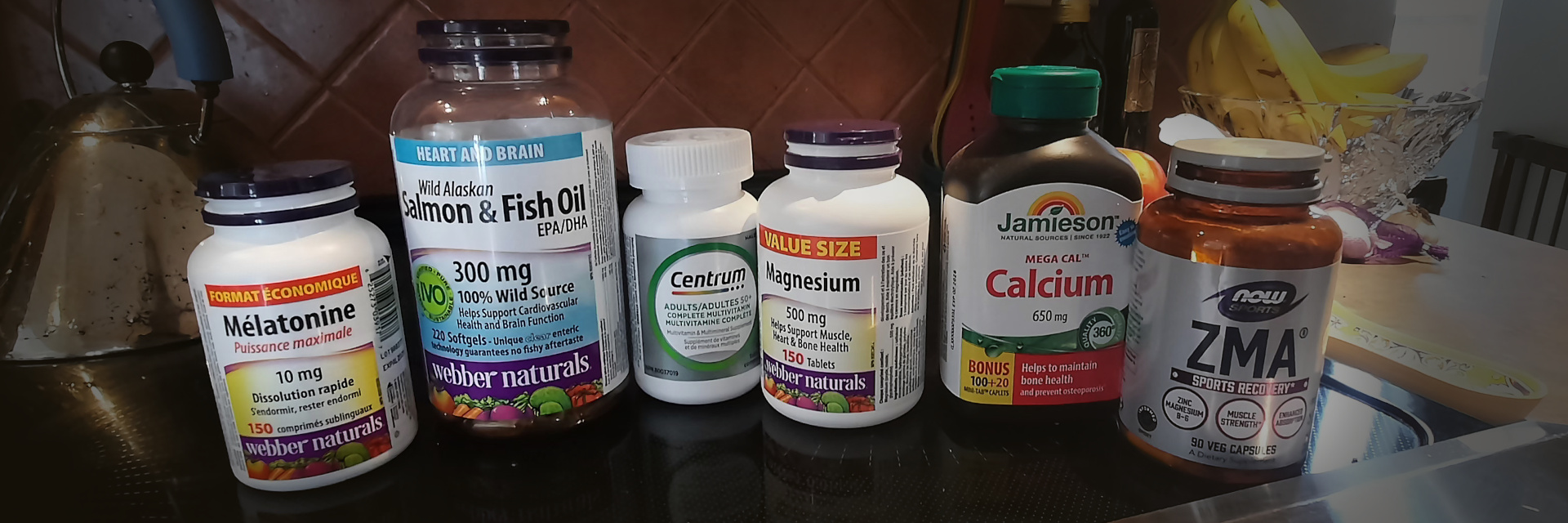
This is a list of supplements I’ve tried at some point. In general, I don’t think supplements are that useful, especially compared to good habits, but some of them (magnesium, melatonin) have worked well for me.
Magnesium
I take 500 mg of magnesium nearly every day. On most days, I don’t need it, but I find that it helps me feel better during periods when I feel fatigued or have difficulty sleeping — especially during extended fasts.
There are different types of magnesium such as magnesium glycinate that are supposedly different. I’ve tried the Webber Naturals (magnesium) and CanPrev (magnesium glycinate) brands and haven’t noticed much of a difference.
Related
- What can magnesium do for you and how much do you need? (Harvard Health Publishing)
Ashwagandha
I previously took ashwagandha every day alongside the magnesium because I heard that it could help with sleep. Personally, I didn’t notice any effects from it, so I stopped taking it.
Related
- Withania somnifera (Wikipedia)
- Decision on ashwagandha root extract as a supplemental ingredient in foods (Health Canada)
Melatonin
I took melatonin every night to help me sleep for quite a while, and I found that it worked fairly well. However, I find that I can naturally get tired these days, so I no longer need the melatonin.
Related
- Melatonin (Wikipedia)
-
Summary Safety Review - MELATONIN
(N-acetyl-5-methoxytryptamine) - Review of the Safety
of Melatonin in Children and Adolescents (Health
Canada)
- TL;DR: Melatonin probably isn’t useful to kids.
Nicotine
I use nicotine replacement lozenges occasionally (about 10 times per year). However, the lozenges are not meant to be used by non-smokers, and nicotine has health risks, so I don’t necessarily recommend it.
Anecdotally, I find that the lozenges improve my focus and help me relax. This seems to increase my average Anki pass rate from 90% to nearly 92%, so they are a good fit for exams in my opinion. That said, I dislike the taste, they upset my stomach a bit, and I’m aware of the risks, so I only use them in exceptional situations.
Related story: A few years ago, I came across a man in the city who was going through a very bad cigarette withdrawal (cursing, throwing things at people, etc.), so I gave him one of my nicotine lozenges. It didn’t seem to help him much, but I still carry them in my bag in case they’re ever useful in such a situation.
Related
- Nicotine (Wikipedia)
- Effects of nicotine on human brain development (Wikipedia)
- Guidance on advertising nicotine replacement therapies: Overview (Health Canada)